

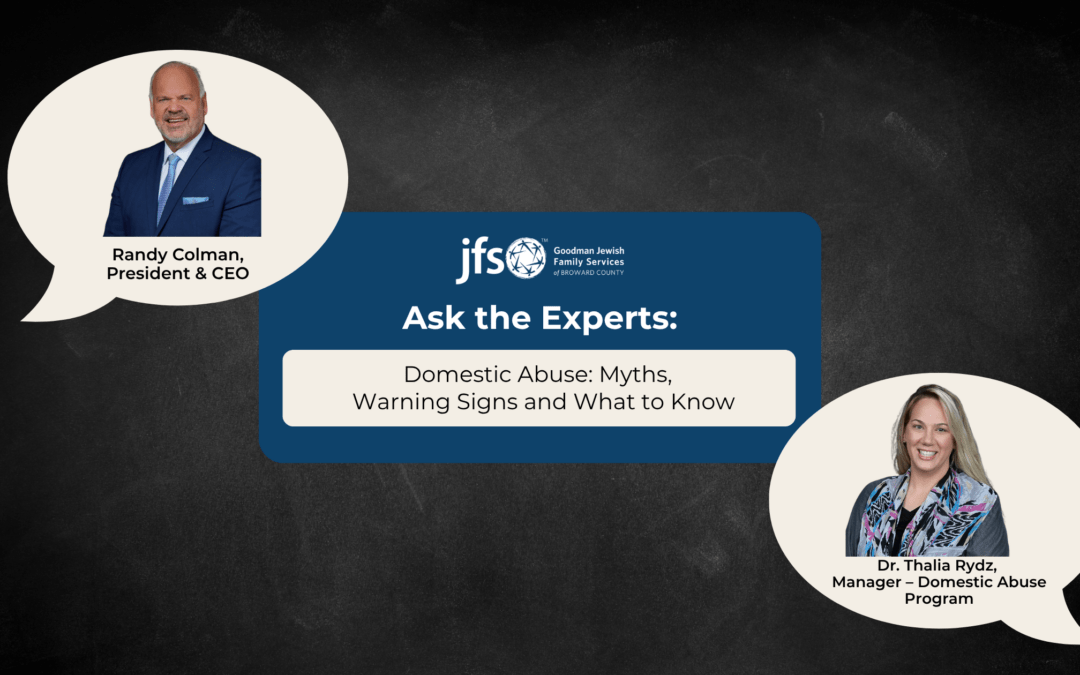
Ask the Experts: A Q&A Series from Goodman JFS
At Goodman Jewish Family Services, we believe knowledge is power. In this Ask the Experts Q&A series, Goodman JFS President & CEO Randy Colman sits down with our professional leaders for timely conversations on the issues that matter most to our community.
Whether you’re seeking insights, support or a deeper understanding of the services we provide, this series is designed to offer practical guidance and expert perspectives on mental health, family wellbeing and caring for our community. It’s just one more way we aim to serve by supporting those who need help and informing those looking to make a difference.
Q&A with Dr. Thalia Rydz, Manager – Domestic Abuse Program
Domestic abuse is often misunderstood. Many people believe it only affects certain communities or looks a specific way. In reality, abuse can happen in any relationship and at any age. This Ask the Experts Q&A explores common myths, warning signs and available resources, with a focus on awareness and support here in Broward County and South Florida.
Q: Many people think domestic abuse only affects certain types of people. In reality, who is at risk?
A: Many times, people believe domestic abuse only happens in specific communities or situations. The reality is that domestic violence can affect anyone. It impacts all genders, ages, races, religions, income levels and backgrounds.
These stereotypes can prevent people from recognizing abuse in their own lives or in the lives of others. They may also delay intervention or discourage someone from seeking help. Abuse does not discriminate, and understanding that is a critical first step in prevention and support.
Q: There’s a common belief that “real” abuse is only physical. What forms of abuse often get overlooked or misunderstood?
A: Many people assume abuse must leave visible bruises or physical injuries. In reality, abuse can also be:
- Emotional
- Psychological
- Verbal
- Financial
- Sexual
- Digital
These less visible forms of abuse are often just as damaging as physical violence. They can have long-lasting emotional, financial and mental health consequences. Because they often escalate gradually, they may be difficult to identify until significant harm has already occurred.
Q: How does domestic abuse show up in teen and young-adult relationships, and why do so many parents overlook the signs?
A: In teen and young-adult relationships, abuse often appears as:
- Extreme jealousy
- Constant monitoring
- Controlling behavior
- Pressure related to intimacy
- Isolation from friends or family
Many parents overlook these warning signs because they confuse them with “normal” teenage behavior or developmental phases. However, open conversations about boundaries, respect and healthy relationships are critical. Unhealthy relationship patterns established at a young age can continue into adulthood.
For a deeper look at this topic, I’ve shared more perspective this blog post.
Q: What are some red flags someone might miss because they don’t fit the stereotypical idea of what abuse or an abuser looks like?
A: Red flags are often missed because the person causing harm may appear charming, successful or well-respected in public. Abuse frequently happens behind closed doors and does not always match the image people expect.
Warning signs can include:
- Constant monitoring
- Manipulation
- Intimidation
- Gaslighting
- Financial control
Recognizing these behaviors early can help disrupt patterns of abuse before they escalate.
Q: When someone recognizes these warning signs, whether in themselves or a loved one, what steps can they take, and what resources are available?
A: When someone begins to recognize signs of domestic abuse, a first step is speaking to a trusted person and documenting concerns. Safety planning is important.
Confidential support is available through:
- Local domestic violence agencies
- 24-hour domestic violence hotlines
- Counseling and behavioral health services
- Community advocacy organizations
Reaching out for help can be an important step toward safety, healing and long-term stability.
If you or someone you know is experiencing domestic abuse, please speak up and help break the silence.
To contact Dr. Thalia Rydz, email trydz@jfsbroward.org.
Resources
- Goodman Jewish Family Services of Broward County – Domestic Abuse Program & support services: 954-370-2140
- Women In Distress of Broward County (24/7 Hotline): 954-761-1133 / 954-527-5385
- Legal Aid Service of Broward County: 954-765-8950
- Coast to Coast Legal Aid of South Florida: 954-736-2424
- 2-1-1 Broward Information & Referrals: 211
- Florida Domestic Violence Hotline (24/7): 1-800-500-1119